The movers left at half past six, and the quiet that followed was louder than the truck had been. I stood in the middle of the living room with a mug I could not find a clean surface for, surrounded by boxes labeled in my own handwriting — KITCHEN, BOOKS, MISC, and one that simply said STUFF, which told me nothing at all. The light switches were in the wrong places. The fridge hummed in a key I did not recognize. Somewhere upstairs, a pipe made a small, unfamiliar sound, and I caught myself listening the way you listen in a house that is not quite yours yet. That is the first night in a new home. Nobody tells you how strange it can feel, even when you chose the place, even when you wanted the move, even when the keys are finally in your pocket.
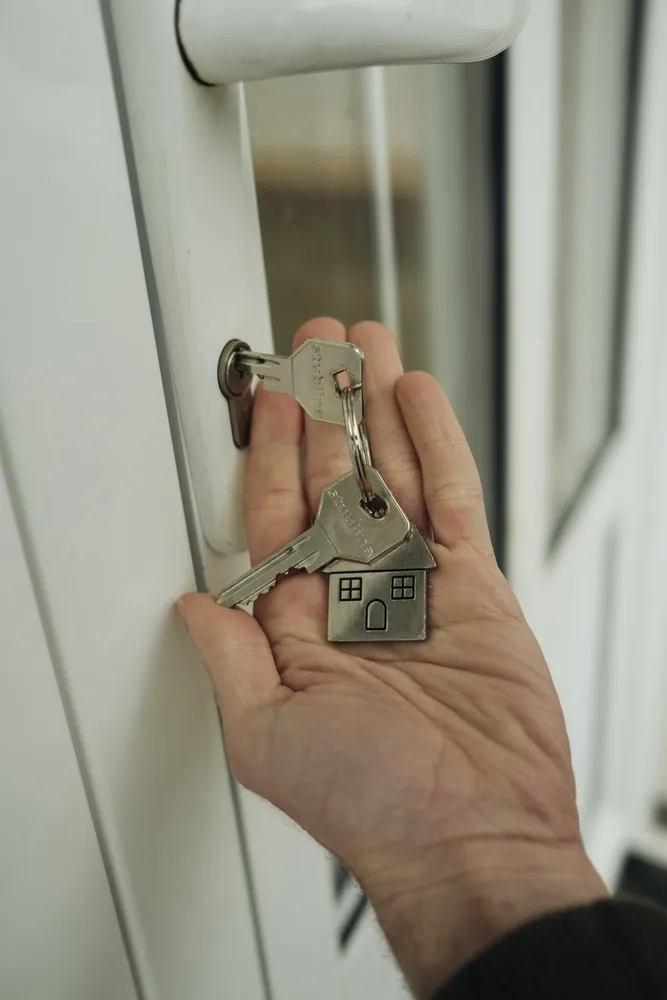
I did not unpack that night. I found the kettle, made tea, and sat on the one chair that was not buried under anything, and I prayed — not a long prayer, not a fancy one, just a few honest sentences about the rooms around me. I asked God to make this place a home, not just an address. I prayed over the front door, because that is where the world comes in and where my family goes out. I prayed over the kitchen, because that is where we would feed each other on good days and tired days alike. And I prayed over the bedroom, because I needed to sleep, and sleeping somewhere new takes a kind of trust you do not notice until you try it. Fifteen minutes, maybe less. Nothing dramatic happened. But the next morning the house felt a fraction less strange, and I understood something I have carried since: a house becomes a home partly through what you do in it, and partly through what you say over it, out loud, on purpose, before the routines have settled in.
That is what this house blessing prayer is for. You do not need a priest, a special object, or a perfect house. You do not need to have finished unpacking, and you certainly do not need to have everything figured out. You need fifteen minutes, a willing heart, and the rooms you are standing in. Whether you own the place or rent it, whether it is a house with a garden or a second-floor apartment with thin walls and a neighbor who practices the trumpet, whether this move was a joyful fresh start or the best option after a hard season — this prayer is yours to use. Copy the blessing below, walk the rooms slowly, say it out loud even if it feels odd at first, and let the house hear a voice that belongs to it now: yours, praying.
The House Blessing Prayer for a New Home
Start here. If you have only a few minutes, this is the whole of it, and it is enough. Copy it, read it aloud in your home, change the names and the details to fit the people who will live here, and let that be the beginning. Everything after this section is help — the room-by-room walk, the renters’ version, the prayer for a hard move — but none of it is required. A sincere prayer said once, in your own voice, in your own hallway, is a real blessing.
God, our Father, thank You for this home. Thank You for the roof over us, the walls around us, and the door that opens to welcome the people we love. We ask You to bless this place and everyone who lives here. May this house be a home of peace, where arguments end in forgiveness, where laughter is louder than worry, and where no one who lives here feels alone. Bless the kitchen, that the food prepared here would nourish us and the conversations around the table would draw us closer. Bless the bedrooms, that our sleep would be deep and our mornings steady. Bless the living room, that it would hold honest talk, good rest, and friends who feel at ease the moment they sit down. Bless the front door, that everyone who enters would feel welcome, and everyone who leaves would carry peace with them. Guard this home from harm, from fear, and from bitterness. When hard days come — and they will — remind us that You are here, in this house, with us, and that home is not a perfect place but a loved one. As for me and my house, we will serve the Lord. May this home be known for kindness, for generosity, and for grace. In Jesus’ name, Amen.
Read it slowly. That is the only instruction that matters. A blessing rushed through at the speed of a grocery list does not settle anywhere, in you or in the house. Stand still in one room — the front door is a good place to begin, or the kitchen if that is where you feel most at home — and read it out loud, in a normal voice, at a normal pace. If you stumble over a line, start the line again. If a line catches you, the one about forgiveness, or the one about sleep, or the one about the front door, pause there and add a sentence of your own. “God, especially help us with this one.” That is not interrupting the prayer. That is the prayer becoming yours.
If you are praying with your family, let everyone have a part. A child can read the line about the living room. A partner can read the line about the bedrooms. A teenager who would rather be anywhere else can still be handed the shortest line and discover, to their own surprise, that saying it out loud was not as awkward as they feared. And if you are praying alone, say it anyway. A house blessing is not a performance for an audience. It is a conversation between you and God about the place where you live, and God has heard plenty of prayers said by one person in an empty room. Yours will not be the first, and it will not be the least.
The Fifteen-Minute Room-by-Room Blessing
Here is the part nobody else on the search results gives you: a walk you can actually do, in fifteen minutes, in your own home, tonight. You do not need candles, oil, or anything bought for the occasion, though if a candle helps you slow down, light one and carry it with you — there is nothing wrong with a small flame marking a small ceremony. Bring this page on your phone, or print the prayer, and walk slowly from room to room. At each stop, read the short line for that room, add one sentence of your own if a thought comes, and move on. The whole point is unhurried attention. A house that has been prayed through room by room stops feeling like a set of empty boxes and starts feeling like a place with a story, even if the story so far is only one evening long.
Begin at the front door, because the front door is where a home makes its first promise. Stand inside it, put your hand on the frame if you like — nobody is watching, and the gesture helps you mean it — and pray: “God, bless this door. May everyone who enters here feel welcome, and may everyone who leaves carry peace with them. Keep this home safe, and keep the people who live here kind to one another and to the neighbors beyond this door.” Think, as you say it, about the people who will come through that door in the months ahead: family arriving with food, friends arriving with news, a delivery driver arriving in the rain, a child arriving home from school with a story that cannot wait. A front door is a small thing, a rectangle of wood and paint, but it is also the boundary between the world and your household, and praying over it is a way of saying that what happens inside this house matters.
Move next to the kitchen, and do not apologize for the state of it. Every kitchen in a new home looks like a small disaster for the first week, and that is exactly why it deserves a prayer. The kitchen is where a household is fed, and feeding people is one of the oldest acts of love there is. Pray: “God, bless this kitchen. May the food made here nourish us, may the work done here be shared fairly, and may this room hold more honest conversation than complaint.” Then look at the table, if you have one, or the counter where you will eat standing up for the first few days, and add a line for it: “Bless this table. May the people who sit at it feel they belong, may no one eat alone unless they choose to, and may the meals here be ordinary and good.” Tables do more than hold plates. They hold birthdays, homework, late-night talks, and the kind of silence that is comfortable rather than tense, and a prayer over a table is a prayer over all of that at once.
The living room comes next, and it is worth praying over even if it is still full of boxes and the sofa is facing the wrong wall. Pray: “God, bless this room. May it be a place of real rest, not just of screens and noise. May the conversations here be honest, the laughter frequent, and the quiet peaceful.” If you have a favorite chair already, or a window you like, stand near it while you pray. Homes are not blessed in the abstract. They are blessed in the particular — this chair, this window, this slightly scuffed floor where the children will play and the dog will sleep. Naming the particular things is what makes a prayer feel true, and it is also what makes you notice them later, on an ordinary Tuesday, and feel glad that you did.
Then go to the bedrooms, one by one, and take your time here. Bedrooms are where we are most unguarded, where the day ends and the worries of the day either settle or refuse to. Pray over each bed, or each room if the beds are not made yet: “God, bless this room. Give deep sleep to the person who sleeps here, and steady mornings. Guard their dreams, quiet their fears, and let this room be a place where they feel safe.” If you have children, pray their names in their rooms, even if they are asleep or not yet home. A child’s bedroom prayed over by a parent carries a weight that child may not understand for years, and then one day, as an adult, they will remember it and understand it all at once. If you sleep alone, pray the same prayer for yourself without embarrassment. You are allowed to ask God for good sleep and quiet nights. That is not a small request. It is a human one.
Do not skip the bathroom, though most house blessings do. It is a room of beginnings — mornings, getting ready, washing off the day — and it deserves a sentence too: “God, bless this room. May the mornings here start gently, may we be patient with each other in the rush, and may this small room remind us that ordinary care — clean water, a warm shower, a mirror that tells the truth kindly — is a gift.” That sounds almost too ordinary to pray about, and that is precisely the point. A house blessing that only covers the grand rooms and forgets the ordinary ones has missed where most of life actually happens.
Finish in the room that worries you most. Every new home has one: the room that is too dark, or too small, or that still smells of the previous occupants, or the room where the argument happened during the move, or the room you have no idea what to do with. Stand in it and pray the most honest sentence of the whole walk: “God, bless this room too. I do not know what it will become yet, and I am not sure I like it right now. Help us to make it good, help me to be patient with it, and do not let one difficult room spoil the whole house.” That is a prayer God understands perfectly, because it is honest. And honesty, in a house blessing as in everything else, is what makes the words real.
Fifteen minutes, seven stops, one walk. You can do it tonight, even if the boxes are still everywhere. In fact, especially if the boxes are still everywhere. A house does not need to be finished before it is blessed. It needs to be blessed while it is still becoming, because that is when the blessing does its quietest and most important work — not changing the house, but changing how you live in it.
A Blessing for Renters and Apartment Dwellers
Most house blessing prayers quietly assume you own the place. They talk about “your house” as if you bought it, as if the walls are yours to paint and the garden is yours to dig, as if you will be there for twenty years. That leaves out millions of people — renters, apartment dwellers, people in shared houses, people in temporary housing, people whose lease is twelve months long and whose landlord has strong opinions about nails in the wall. So let me say this plainly: your home counts. A rented apartment is a home. A one-bedroom apartment on the third floor is a home. A room in a shared house, with your books on the shelf and your name on the door, is a home. God does not check the deeds before He listens to a prayer, and a blessing is not weaker because the lease is shorter than a mortgage.
The prayer at the top of this page works exactly as it is for a rented home. You do not need to change a word of it, except perhaps to notice that it never once mentions owning anything. It talks about living, eating, sleeping, welcoming, and forgiving — and all of those belong to renters just as much as to owners. But there are a few lines worth adding, and they are worth saying out loud, because renting comes with its own small griefs and its own particular graces, and a prayer that names them is a prayer that heals them.
Start with the truth about the place itself. Pray: “God, thank You for this home, even though it is not ours to keep. Thank You for the landlord who said yes, for the rent we can manage, and for the months ahead in this place. Help us to care for it as if it were our own, because while we live here, it is.” That last line matters more than it sounds. Renters are often told, in small ways, that the place is not really theirs — do not paint, do not hang, do not make it yours. A blessing pushes back against that, gently. While you live somewhere, it is your home. Treat it as such. Hang the picture with the removable hook. Put the plant on the windowsill. Make the small, reversible changes that turn a unit into a place where you belong.
Then pray for the neighbors, because in an apartment that prayer is not optional, it is daily life. “God, bless the people above us, below us, and beside us. Help us to be good neighbors — quiet when quiet is needed, kind when kindness is needed, patient with the noise of other people’s lives. And when we need help, give us the courage to knock on a door and ask.” Apartment living is a masterclass in neighborliness, and it is not always easy. The walls are thin. Someone’s music is someone else’s headache. Someone’s baby crying at three in the morning is the whole floor’s three in the morning. Praying for your neighbors before the first irritation arrives is one of the wisest things you can do in a new apartment, and it changes how you hear the sounds through the wall — not as an intrusion, but as evidence that you are not living alone in the world.
Pray, too, about the uncertainty. Renting means not knowing how long you will stay, and that uncertainty can make a person hold back from settling in, from buying the rug or planting the herb pot or learning the names of the people on the landing. “God, help us not to live here as if we are only passing through, even if we are. Help us to put down roots that can be lifted when the time comes, and to love this place while we have it, without resenting that we cannot keep it.” That is a hard prayer and a freeing one. It says: I will not wait for permanence before I allow myself to be at home. I will be at home now, in this place, for as long as I am here.
And if you share the home — with roommates, with family, with a partner you are still learning to live with — pray for the sharing itself. “God, bless the people I share this home with. Help us to divide the work fairly, to respect each other’s quiet, and to forgive the small things quickly — the dishes, the noise, the borrowed charger. Make this shared home a place where everyone feels they belong, not just that they pay a share.” Shared living is where most house blessings are tested, daily, in the smallest possible ways, and a prayer that names the dishes and the charger is not trivial. It is practical theology, and it works.
One more thing for renters: bless the front door of your building as well as the door of your apartment. The stairwell, the hallway, the elevator that works most of the time — these are part of your home too, and a short prayer for them costs nothing. “God, bless this building and everyone who lives in it. Keep it safe, keep it friendly, and help us to be the kind of neighbors who make it better.” You may never know what that prayer does. You may simply notice, over time, that the building feels a little warmer than it did on the day you arrived. That is enough.
A Blessing After a Hard Move
Not every move is a celebration. Some moves follow a divorce, and the new home is smaller than the old one, and the boxes contain half a life. Some follow a death, and the new home is quiet in a way that has nothing to do with the walls. Some follow a job loss, or an eviction, or a move across the country that was supposed to fix everything and has so far fixed nothing. Some moves are simply hard — the truck broke down, the money ran short, the help did not arrive, and by the time the last box was in, you were too tired to feel anything at all, including relief. If that is your move, this section is for you, and it is written without pretending otherwise.
First, you are allowed to bless a home you do not love yet. A blessing is not a declaration that everything is wonderful. It is a request that God would be present in a place that is, right now, complicated. You do not have to feel grateful to pray. You do not have to feel hopeful to ask for hope. You can stand in a half-empty room, with a sore back and a heavier heart, and say: “God, I am here, and I do not love this yet, and I am tired. Bless this home anyway. Be here anyway.” That is a complete prayer. It does not need a cheerful ending to count.
Here is a shorter blessing written for exactly that situation, to pray alone or with the people who moved with you:
God, this move was hard, and this home does not feel like home yet. Thank You for getting us here, even when the road was rough. Bless this place, not because it is perfect, but because we need a place to rest. Heal what is sore in this household — the grief, the anger, the fear, the exhaustion. Give us sleep that restores us, mornings that feel possible, and small good moments that remind us life is still going on. Help us to be gentle with each other while we adjust, and gentle with ourselves, too. May this home become, slowly, a place of peace. Not all at once. Slowly is enough. Amen.
Notice what that prayer does not do. It does not say the hard season was a blessing in disguise. It does not say everything happens for a reason. It does not rush you toward gratitude you do not feel. It names the grief and the exhaustion, asks for sleep and small good moments, and leaves room for “slowly”. That is the shape a prayer after a hard move needs to take. Forced cheerfulness is not faith. It is avoidance, and it does not survive the first hard evening in a new place. Honesty does.
If the move followed a divorce or a separation, there is one more thing worth praying, and it is worth saying out loud even though it hurts: “God, bless this home for the people who live here now, even though the household has changed. Help the children to feel safe in both homes, if there are two. Help us not to speak bitterly about the person who is not here. Help this home to be a place where the past is remembered honestly but does not rule the future.” That is a large prayer for a small room, and you may need to pray it more than once. Pray it weekly for a while, if it helps. Some prayers are not one-time events. They are practices, and they do their work slowly, the way water shapes stone — not by force, but by faithful return.
If the move followed a loss — a person, a home, a whole way of life — let the blessing make room for the person or the place that is gone. “God, we miss them. We miss the old house, the old street, the old life. Thank You for what was good there. Help us to carry the good memories into this new home without asking this new home to replace what we lost. May this place hold both grief and hope at the same time, because that is what we are carrying.” A new home after a loss is not a replacement. It is a next chapter, and it is allowed to hold both the sadness of what ended and the possibility of what might still come. A house that has room for both is a house that tells the truth.
And if the move was hard simply because moving is hard — because the money was tight, the help fell through, the apartment was not ready, the landlord was difficult, the whole thing cost more than you planned in every sense — then pray the simplest version of all: “God, that was hard. Thank You that it is done. Bless this home. Help us to rest. Help us to start again, one box, one meal, one night’s sleep at a time.” There is no shame in a move that went badly. Most moves go badly in at least one way. The blessing is not a reward for a smooth move. It is a gift for the move you actually had.
One practical note for hard moves: bless the house more than once. Do the room-by-room walk on the first night, and then do it again a week later, and again a month later, when the boxes are gone and the rooms have started to show who lives in them. The second blessing will sound different from the first, because you will be different. You will know which room gets the morning light, which floorboard creaks, which neighbor waves. A house blessing after a hard move is not a single ceremony. It is the beginning of a relationship with a place, and relationships take time.
What the Bible Says About Home
A house blessing prayer is not a spell, and it is not a superstition. It is a Christian practice with deep roots, and it helps to know what the Bible actually says about home, so that the prayer stands on something solid rather than on sentiment alone. The first thing the Bible says is that a home is built by God, not only by builders. “Except the LORD build the house, they labor in vain that build it: except the LORD keep the city, the watchman waketh but in vain.” — Psalm 127:1 (KJV). That verse is not a warning against hiring a good builder. It is a reminder that a house is more than bricks and timber, and that the peace of a household depends on something no contractor can install. When you bless your home, you are acknowledging that truth out loud: God, this place is Yours as well as ours, and we need You in it.
The second thing the Bible says is that a household can choose its direction. “But as for me and my house, we will serve Yahweh.” — Joshua 24:15 (WEB). Read it in full at BibleGateway, Joshua 24:15 (WEB). Joshua spoke those words to a whole people standing at a crossroads, and the words still work for a single household standing in a new hallway. A house blessing is, in part, a household choosing: whatever the world outside this door chooses, whatever the culture around us values, this house will be a place where God is honored, where kindness is practiced, and where the people who live here are treated as people God loves. You do not need to announce that choice to the street. You need to make it, together, in the house itself, and then live it out in the small daily decisions that follow.
The third thing the Bible says is that home is where welcome happens. The early church met in homes. Jesus ate in homes, stayed in homes, healed in homes, and wept in a home when His friend Lazarus died. Hospitality in the Bible is not entertaining. It is opening a door and a table to people who need rest, food, and company, and it is one of the most ordinary and most radical things a household can do. When you bless your front door and your table, you are not performing a ritual. You are preparing your home for its real work: receiving people, feeding people, and giving them a place to be fully themselves for an hour or an evening.
And the fourth thing, which is easy to forget when the boxes are everywhere, is that God is at home in ordinary houses. He is not only in churches and cathedrals. He is in kitchens where someone is trying a new recipe and burning it slightly. He is in bedrooms where a parent is sitting up with a sick child. He is in living rooms where a family is arguing and then, slowly, forgiving. A house blessing prayer is a way of noticing that — of saying, out loud, that this ordinary place, with its scuffed floors and its unfamiliar pipes, is a place where God is present. That does not make the house holy in the way a church is holy. It makes it loved, and that is a different and equally important thing.
The Short Version to Text, Write, or Send
Sometimes the full blessing is more than the moment needs. You are writing in a housewarming card, and the space is small. You are texting a friend who has just moved, and a long prayer will not fit the screen or the friendship. You are standing in a new home with a friend who has asked you to pray, and you have thirty seconds before the moment passes. For those moments, here is the short version — the same heart, in fewer words, ready to copy exactly as it is.
God, bless this new home. May it be full of peace, laughter, and love. May everyone who lives here feel safe, and everyone who visits feel welcome. Guard this home, guide this household, and make it a place of kindness and rest. As for me and my house, we will serve the Lord. Amen.
That version fits in a card, in a text, or on the back of a housewarming gift tag. If you are sending it to someone else, add one line of your own before it or after it — a memory, a wish, a joke only the two of you understand. “So glad you found this place. I prayed this over it before I sent it, and I mean every word.” That single sentence turns a copied prayer into a personal one, and the person who receives it will feel the difference immediately, even if they cannot explain why.
For a housewarming gift, the short blessing works beautifully written inside the card, or printed on a small piece of card and tucked into a basket of bread, a plant, or a candle. Bread is the traditional housewarming gift for a reason: it says, may this home never go hungry. A plant says, may this home grow. A candle says, may this home be warm and bright. Any of them, paired with this short prayer, becomes more than a gift. It becomes a blessing the new household can keep, on a fridge or a mantelpiece, and read again on a hard day when they need to remember that someone prayed for their home before they had even finished unpacking it.
If you are the one who has moved, and a friend sends you a blessing, keep it. Do not be embarrassed about needing it. Moving is one of the most stressful things a person can do, and a friend who prays for your home is a friend who understands that. Read their blessing in the house, out loud if you can, and let their words join yours. A house blessed by more than one voice is a house with more than one witness to its beginning, and that is a good way to start.
What to Do With the Prayer Afterward
A house blessing is not a one-time event, and it should not be treated like one. The prayer you say on the first night is a beginning, not a completion, and what you do with it afterward is what turns a ceremony into a habit, and a habit into the character of a household. Here are four simple ways to keep the blessing alive, none of which require more than a few minutes, and all of which work whether you live alone or with a family of six.
First, put the blessing somewhere you will see it. Print it, or write the short version on a card, and put it on the fridge, inside a kitchen cupboard, or on the wall by the front door. Not as decoration, but as a reminder. In a month, when the newness has worn off and the house has started to show its frustrations — the draft, the leak, the neighbor, the bill — you will see those words and remember what you asked for on the first night, and you will have a chance to ask again, this time with more knowledge of what the house actually needs. A prayer on a fridge is not a superstition. It is a promise you made to yourself, kept visible.
Second, repeat the room-by-room walk at the change of seasons, or on the anniversary of your move. Walk the same route, pray the same short lines, and notice what has changed. The room that worried you most may have become your favorite. The kitchen may have hosted its first big meal. The bedroom may have held its first good night’s sleep after a long stretch of bad ones. A blessing repeated is not a blessing wasted. It is a way of marking time in a household, the way birthdays mark time in a life, and it gives a family a rhythm of gratitude that does not depend on everything going well.
Third, make the front-door prayer a daily habit, in the smallest possible form. Every time you leave the house, say a sentence: “God, bless this home while I am gone, and bring me back safely.” Every time you come home, say another: “God, thank You for this home, and help me to be kind in it tonight.” Those two sentences take five seconds each, and over a year they add up to a household shaped by prayer in the most ordinary moments — leaving, returning, cooking, sleeping. That is what a blessed home actually looks like, not a house with a ceremony in its past, but a household with prayer in its present.
Fourth, bless the home again whenever something changes. A new baby arrives — bless the nursery, and the whole house again, because the household has grown. A child leaves for university — bless their empty room, and bless them as they go, because the household has changed shape. Someone moves in, or moves out, or a marriage begins, or a season of illness ends — each of these is a reason to walk the rooms again, briefly, and pray again. A house is not blessed once and finished. It is blessed again and again, as life happens in it, because life keeps happening in it, and the prayer needs to keep up.
And if you are wondering whether all of this is too much — too many prayers, too many walks, too much attention to a building — consider the alternative. A house with no prayer in it is still a house. It still shelters you, still holds your things, still keeps the rain off. But a house with prayer in it is a home in a fuller sense, because someone has taken the time to say, out loud, what this place is for. Peace. Welcome. Rest. Forgiveness. Kindness. Those are not features of a building. They are choices made by the people who live in it, renewed daily, and a blessing is simply the first of those choices, spoken out loud on the first night.
More Blessings for the People You Love
A new home is one of life’s big thresholds, and it is rarely the only one happening at the same time. The same household that needs a house blessing is often celebrating something else too — a birthday, a wedding, an anniversary, a new baby — and the people you love deserve a blessing for each of those moments as well. You will find more short, sendable blessings in our Blessings collection, including a short birthday prayer for a friend you can send by text, a wedding blessing for the next happy couple you celebrate, a short anniversary prayer for couples marking another year together, and a new baby blessing for the newest member of a household you love. Each one is written in the same spirit as this house blessing: simple, Bible-based, and meant to be shared, not shelved.
Frequently Asked Questions
Do I need a priest or pastor to bless my new home?
No. A priest or pastor can certainly pray over a home, and if you would like yours to do so, invite them — it is a lovely thing to ask. But a house blessing does not require one. The prayer in this article is written for a family, a couple, or a single person to pray themselves, in their own home, in their own words. God hears a prayer said by a homeowner in a half-unpacked kitchen just as clearly as one said by a priest in a formal liturgy. If you want both — your own prayer on the first night, and a pastor’s visit in the first month — that is a wonderful combination.
Can I bless a rented home or an apartment?
Yes, completely. A rented home is a home, and an apartment is a home, and both deserve a blessing just as much as a house with a mortgage. The prayer in this article works exactly as written for renters and apartment dwellers, and the renters’ section above adds lines for neighbors, shared spaces, and the uncertainty of a lease. You do not need to own a place to ask God to bless it. You only need to live there.
When is the best time to bless a new home?
The first night is the best time, because the house is still new to you and the prayer helps it start to feel like yours. But there is no deadline. If you have lived somewhere for a month, a year, or ten years and never blessed it, today is a good day to start. Walk the rooms tonight, pray the blessing, and let that be the beginning. A late blessing is still a blessing, and a home that has been lived in for years has even more to pray about — the memories in its rooms, the people who have come and gone, the life that has already happened there.
What if I have already moved in and never blessed the house?
Then bless it now. There is no rule that says a house blessing must happen on moving day, and no reason to feel guilty for missing it. Many people only discover the idea months or years after a move, often when something hard happens and they wish the house felt more like a refuge. Pray the blessing tonight, walk the rooms, and repeat it at the change of seasons. The house will not mind that you are late. God certainly will not.
Can I bless a home after a divorce, a loss, or a difficult move?
Yes, and this article includes a blessing written specifically for that situation. A house blessing after a hard move is not a pretence that everything is fine. It is an honest prayer that names the grief, the exhaustion, and the uncertainty, and asks God to be present in a home that does not feel like home yet. Pray it alone or with the people who moved with you, and repeat it weekly for a while if it helps. Some prayers do their work slowly, and this is one of them.
Should I bless each room, or is one prayer for the whole house enough?
One prayer for the whole house is enough — the main blessing at the top of this page covers the entire home, and if that is all you have time for, it is a complete blessing. The room-by-room walk is an extra, for the evenings when you have fifteen minutes and want to slow down and pray over each space in turn. It is not a requirement, and it is not a test. Do the full prayer, do the walk, or do both. What matters is that the prayer is said, sincerely, in the home itself, by the people who live there.
Welcome home. May the boxes be unpacked sooner than you expect, may the first meal in the new kitchen taste better than it should, may the first night’s sleep be deeper than you hoped, and may this house — owned or rented, large or small, joyful or hard-won — become, slowly and surely, a home.

The HolyPrayerz Editorial Team shares short, sendable blessings for occasions, relationships, and holidays — Bible-based words you can copy, text, or share in a moment.